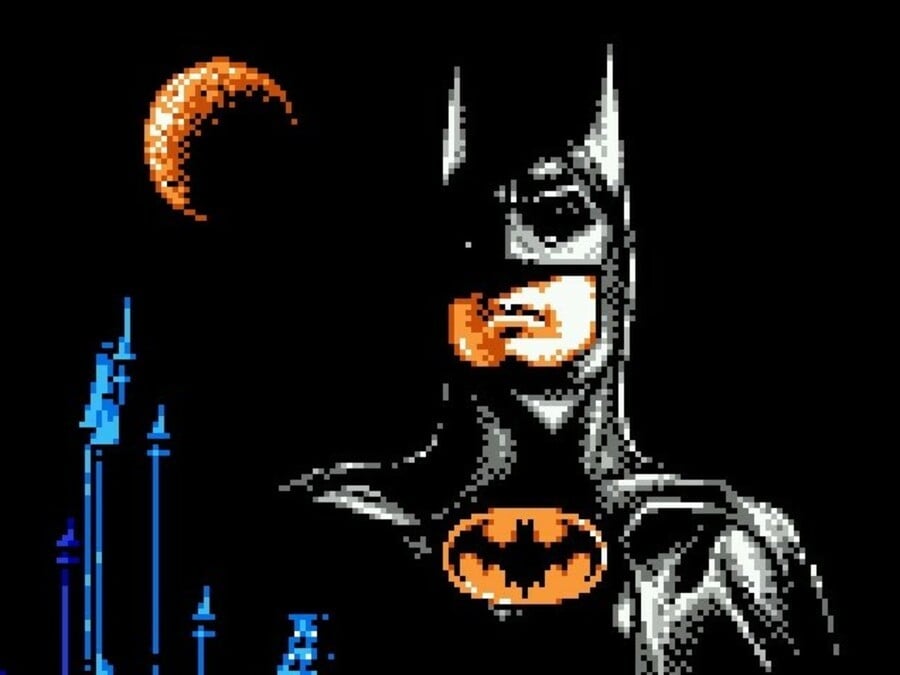
8-Bit Dark Knight: Why Batman on the NES is a Masterclass in Game Design
Released in 1989 to coincide with Tim Burton’s blockbuster film, Batman: The Video Game for the Nintendo Entertainment System (NES) did something rare for movie tie-ins: it was actually incredible. Developed by Sunsoft, this title remains a benchmark for 8-bit action-platformers in 2026.
Gameplay: The Art of the Wall Jump
While many 8-bit games felt clunky, Batman introduced fluid, responsive controls that prioritized precision. The standout mechanic is the wall jump, which allows the Caped Crusader to scale Gotham’s skyscrapers with a ninja-like agility that predated even Ninja Gaiden in terms of feel.
Players have access to an arsenal of iconic gadgets:
- The Batarang: Essential for long-range crowd control.
- The Dirk: A rapid-fire projectile for high-damage output.
- The Bat-Disk: Perfect for clearing enemies at varying heights.
🕹️ Playing in 2026?
To get the best experience on modern 4K displays, we recommend using an AverMedia or RetroTINK upscaler to preserve those crisp Sunsoft pixels and reduce input lag.
Watch our Retro Hardware Guides on YouTubeThe Sunsoft Sound & Gritty Visuals
Sunsoft was famous for pushing the NES hardware to its absolute limit. The graphics utilize a moody, "noir" color palette of deep purples and grays that perfectly capture the 1989 film's aesthetic.
However, the real star is the soundtrack by Naoki Kodaka. The driving basslines and industrial-synth melodies are legendary in the chiptune community. Every level's track creates a sense of momentum that pushes the player through the game's brutal difficulty.
Difficulty: "Nintendo Hard" Done Right
Batman is notorious for its steep challenge, particularly the final climb to face the Joker at the top of the Cathedral. It requires strategic gadget management and pixel-perfect platforming. In 2026, it remains a favorite for speedrunners and "One Credit Clear" challengers due to its fair, yet demanding, level design.
Comments
Post a Comment